
Reseda
What a screening is, and what it is not
A screening is a test done when you feel well, because some problems start quietly. It is not the same as a test ordered because something already hurts.
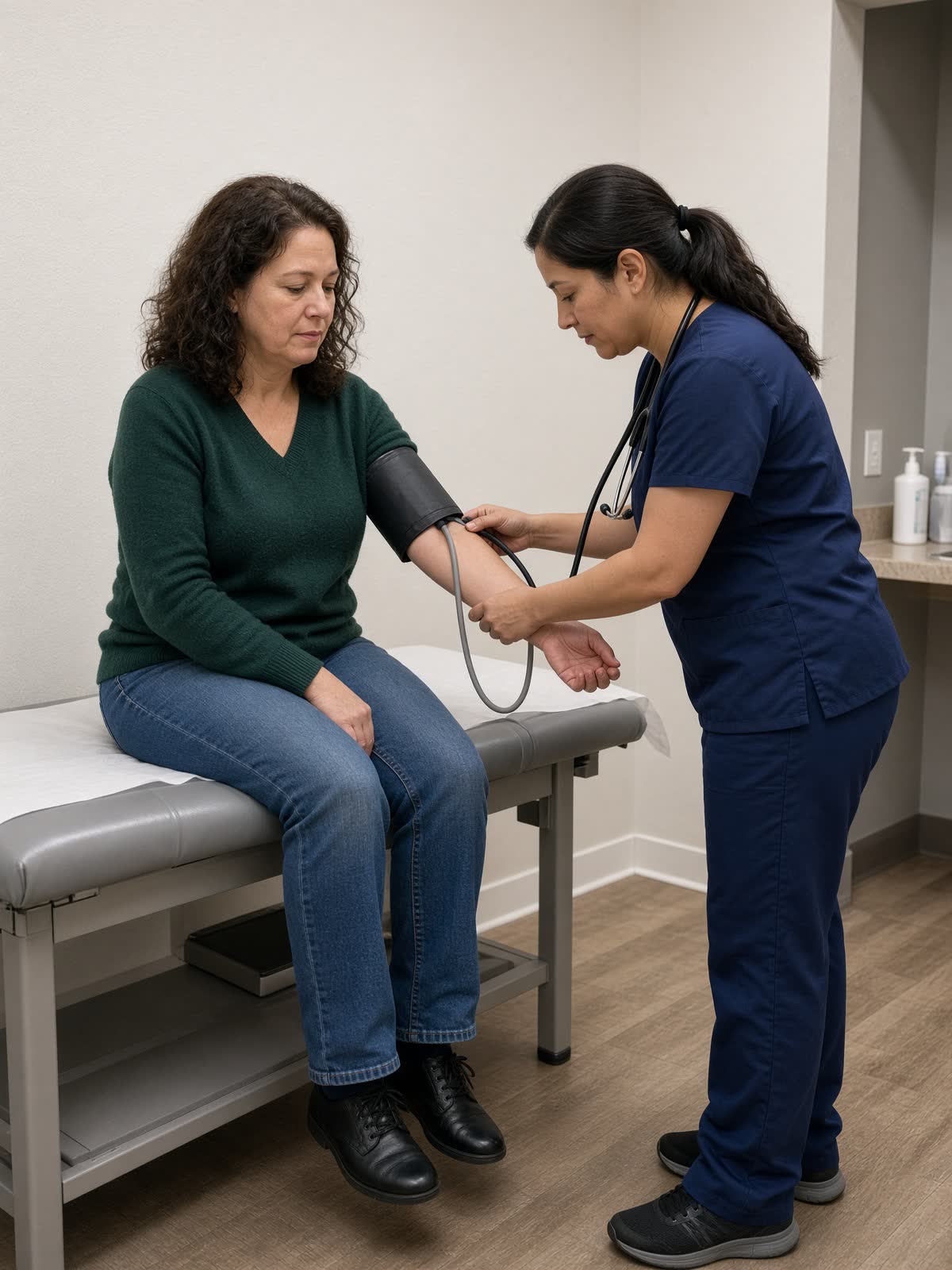
Screening and diagnosis are different jobs
Screening asks a question of someone without symptoms. Diagnosis answers a question raised by a symptom or by an abnormal result. One blood pressure reading, one sugar check, or one form does not name a disease. A clinician decides whether to repeat it, watch it, or send you for a test this clinic does not do in the room.
Earlier is useful only when the next step exists
Finding high blood pressure or a diabetes risk before a crisis can change what you do. The same is not true of every test. Guidelines exist because some tests find harmless changes, cause worry, and lead to procedures you did not need. The U.S. Preventive Services Task Force publishes which screenings have evidence, and for whom. Age, sex, family history, and smoking history change the list. A webpage cannot hand you yours.
What a visit in Reseda can actually open
At Canby Community Clinic, a screening conversation can include blood pressure and a talk about diabetes risk, cholesterol, tobacco, and what test might be next. Cancer screening such as mammography, cervical screening, or colonoscopy is often done at another site. Vaccines may be too. Ask where it happens, where it is done, and who calls you with the result.
Symptoms are not a screening appointment
Bleeding, a new lump, weight you cannot explain, chest pain, or trouble breathing is not something to park on a routine calendar. Call and describe it. If it is an emergency, call 911. For a planned conversation, call (818) 674-4414.
What screening means
A screening looks for a problem before you feel sick. It is not a full-body scan and it is not a promise that nothing is wrong. At a nonprofit community clinic the useful screenings are the ones that change a decision: blood pressure, a conversation about diabetes risk, cholesterol when a clinician orders it, and the cancer screenings that fit your age. Canby Community Clinic is at 7601 Canby Ave #6B, Reseda. Call (818) 674-4414 weekdays from 9 to 5 and say which check you think you need. Staff will say whether that check is done in the room, arranged outside, or better done at another office.
Pressure, sugar, and cholesterol
Blood pressure is read with a cuff. One high number in a noisy morning is not a diagnosis of hypertension. Clinicians look at repeated readings, your medicines, and how you feel. Home numbers help if you write the date next to them. Diabetes risk is a conversation about thirst, weight change, family history, and sometimes a lab test. A finger-stick on a kitchen table is not the same as an A1C drawn and run properly. Cholesterol is a blood test, usually fasting only if the order says so. Ask before you skip breakfast. Not every test is drawn in suite 6B. Ask where it is done.
Cancer checks are not one package
Cervical, breast, and colon screening follow age and history, not a coupon. This page will not invent a calendar for you. A clinician who knows your age and your last test can say what is due. If you have not been seen in years, start with the phone, not with a list of every test you have read about. Bring prior results if you still have the paper. More than 400 patients use this clinic and the number is growing, which means a screening day still has to be scheduled. Do not arrive and expect every test the same afternoon.
Call before you come
Insurance, Medi-Cal, or no card at all: call before you come. This website does not publish a plan list and it does not enroll you in Covered California. Bring an ID if you have one and a medicine list. Write the question you do not want to forget. If you are in severe pain, short of breath, or suddenly weak, call 911. Screening is for a stable day. The clinic is a nonprofit weekday office, not an emergency department, and this website is not monitored after hours.
One more practical point
Write down the last year you remember for each check, even if the year is a guess. Bring that note. A clinician can order what is missing and skip what was done recently somewhere else. Repeating a test because the paper was lost is common and wasteful. If the result has to come from an outside lab, ask how you will hear it and where it is done. Do not assume the clinic will call the same day. Ask. Screening only helps if the result reaches a person who can explain it.
Before you hang up
If a screening is not offered in this room, ask for the name of the place, the phone number, and whether you need an order in your hand. A vague instruction to go get a test is how screenings get lost.
Source: CDC. This page does not diagnose you.
Preventive screenings
Checks matched to your age and history. A result is not, by itself, a diagnosis.