A clinician who does not know what you take can recommend something that stacks badly with a medicine, a vitamin, or a product you buy without a prescription. The U.S. Food and Drug Administration’s consumer update on medication lists, current as of January 8, 2025, describes the list as a way to keep those products in one place so the people caring for you can see them. The same update says a list can matter in an emergency, when you cannot recite the names yourself, and at ordinary visits, because different clinics and pharmacies do not always share one chart.
This page explains how to build that list before a visit to Canby Community Clinic in Reseda. Medication support at the clinic is a conversation about prescriptions, supplements, access, and safer use. It is not a statement that the clinic fills prescriptions or keeps a pharmacy. Bring the list, or the containers. Do not expect either one to produce a refill by itself.
What the FDA says belongs on the list
The FDA says a medication list should include prescription medicines, over-the-counter drugs, vitamins, and supplements. For each product, write four things: the name, the strength, the reason you take it, and the instructions for when, how, and how much you take. “Blood pressure pill, once a day” is a start and it is not enough. Strengths differ. A 10 milligram tablet and a 40 milligram tablet are not interchangeable details.
Add allergies and emergency contacts if you can do it on the same page. The FDA treats those as part of the same safety record, because the list is often what a responder or a new clinician sees first. Add medical conditions if you know them in the words a previous clinician used. If you are unsure of a condition’s name, describe it. Guessing a diagnosis on the list does not help the next person.
The FDA, citing a CDC data brief, says almost 70 percent of people ages 40 to 79 used at least one prescription drug in the past 30 days, and that about 1 in 5 Americans used at least five prescription drugs. The more products you take, the easier it is to drop one when somebody asks “any medicines?” from across a counter. The list exists so your memory does not have to hold all of it on a tiring day. The FDA also notes that some medicines change laboratory results, which is another reason the list should be in the room when blood is drawn.
Build it from the bottles, then check what is not in a bottle
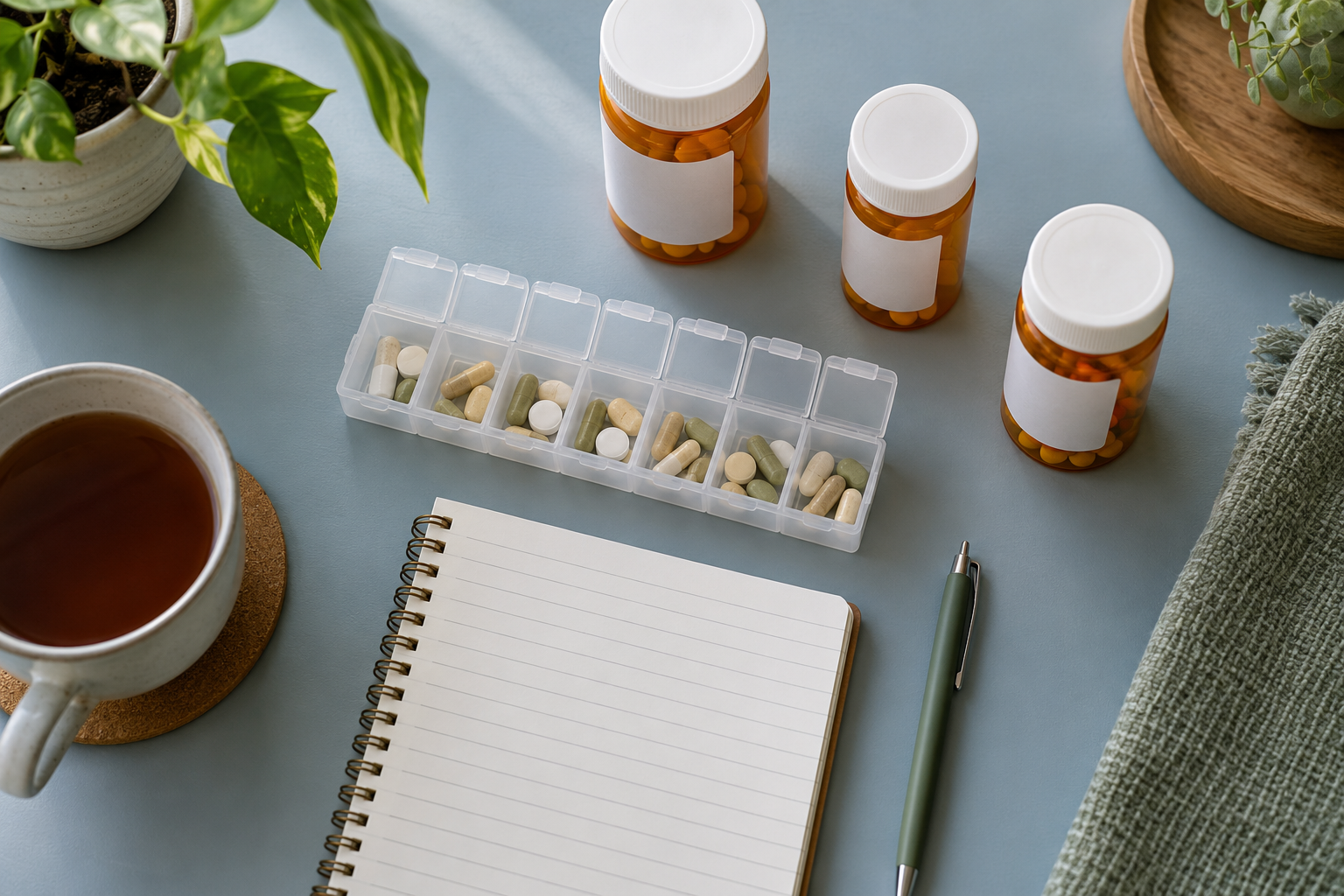
Put the containers on a table. Copy each one while you can still see the label. Include the products you take only sometimes: a pain reliever, an allergy tablet, a sleep aid, a cream, eye drops, an inhaler. Include vitamins and supplements, including products you think of as food. The National Institute on Aging’s visit-preparation guidance, reviewed February 3, 2020, groups prescription drugs, over-the-counter medicines, vitamins, and herbal remedies together and says some clinicians want the containers themselves.
If a pharmacy can print or show you a list of what it has dispensed, use that printout as a cross-check. It will not know about the bottle you bought at a supermarket, the sample a previous office handed you, or a medicine a relative lent you. Those belong on the page too. If you have stopped a medicine recently, write the stop date and the reason, if you know it. A list of only what you took this morning hides the drug that was discontinued last week because it made you dizzy.
The Agency for Healthcare Research and Quality publishes its own page on creating a medicines list, including a template. Use whichever format you will actually update. The FDA says a paper list, a form, an app, or a photograph of the paper list can all work. The best list is the one you can produce at the desk.
Update it when anything changes, and keep a copy with you
The FDA’s instruction is to review and update the list when something changes: a new prescription, a different dose, or a medicine you stopped. Waiting for the annual visit is how old doses survive in the chart. Change the list the day the bottle changes.
Keep a copy you can reach. The FDA suggests a photograph on a phone, an app, or a paper copy kept with the insurance card, and sharing the list with one person who might speak for you if you cannot. At this clinic, bring the copy to the visit. Do not paste the list, your member number, or your diagnoses into the website’s email request. The request form is for a callback, not for a medical record.
Questions worth taking into the room
A complete list is the start of the conversation, not the end of it. For anything new, or anything you do not understand, ask the clinician these questions in your own words:
- What is this for, in plain language?
- What is the strength, and how much do I take, at what time of day?
- How long am I supposed to continue it?
- What should I do if I miss a dose? Do not invent an answer from a previous medicine.
- Are there foods, drinks, or other products on this list that change how it works?
- What would a problem look like, and who do I call if it happens after the office is closed?
Write the answers next to the medicine. If the answer is “we need your pharmacy’s list before we change anything,” that is a useful answer. It means nobody should be guessing from a half-remembered name.
What this clinic can do with the list
Bring the list to a first visit or a follow-up. The new-patient checklist names it specifically. Staff can use it to understand what you take and what you want explained. They can also tell you if the question you have is outside what the clinic can do that day. The public service description does not include filling prescriptions, promising a bridge supply, or quoting a price for a drug. If cost or access is the problem, say that. “I stopped it because I could not pay for it” is information, not a failure of the list.
If a reading or a symptom is the reason for the visit, the list still comes. Blood pressure questions, for example, are hard to interpret when the medicine list is missing. Questions to ask about a blood pressure reading is the companion page. Neither page tells you to start, stop, or change a dose. That decision belongs with a clinician who can see you.
Sources
- U.S. Food and Drug Administration. Create and keep a medication list for your health. Content current as of January 8, 2025. Names the fields to record, includes over-the-counter products and supplements, and cites CDC figures on how commonly adults use prescription drugs.
- National Center for Health Statistics. Data Brief No. 347. The data brief cited by the FDA update above. Read it for the underlying survey wording.
- National Institute on Aging. How to prepare for a doctor’s appointment. Content reviewed February 3, 2020. Describes bringing containers or a dose list, including nonprescription products.
- Agency for Healthcare Research and Quality. How to create a My Medicines list. A federal template and explanation. Follow the page itself for the fields it asks you to fill in.
These sources were checked on October 8, 2026. Guidance and enrollment rules change. Use the linked page for the current wording before you act on a deadline.
About this resource
Prepared by Canby Community Clinic as general patient education. For questions about appointments and services, call (818) 674-4414. This information does not replace individualized advice from a qualified healthcare professional.